

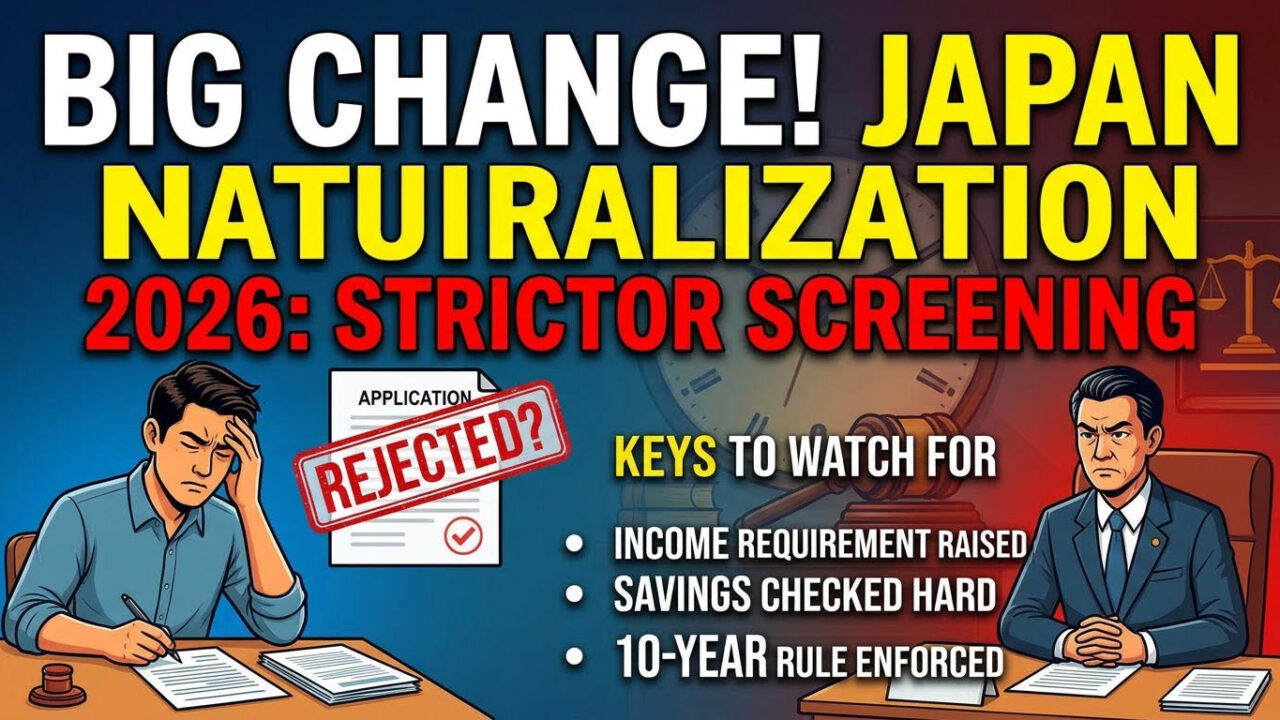
Have you ever thought, “My naturalization will be fine because I have a solid income,” or “It will be okay because I have the same conditions as a friend who passed before”?
In fact, since April 2026, the screening requirements and operations for naturalization applications have become significantly stricter. According to information from experts well-versed in the field, the number of people permitted to naturalize has been decreasing rapidly since this spring, leading to significant changes and confusion in the application process.
This time, I will explain the background behind the stricter naturalization applications, along with essential measures that anyone applying in the future should keep in mind.
1. Why? Reasons for the Dramatic Drop in Naturalization Permissions Since April 2026
According to information from experts involved in the practice, the number of people permitted to naturalize has been on a steep decline since this spring.
Dramatic Changes Visible in Numbers
While the number of permitted applicants followed a typical pace until around March, it fell significantly from April onwards. A substantial decrease has been observed throughout the country, including in major metropolitan areas like Tokyo and Osaka.
Background: “Stricter Screening Criteria”
The biggest factor is the change in screening criteria and operations implemented since April 1, 2026. In addition to a stricter application of the “ten years or more” residency rule, other hurdles, such as an extension of the check period for taxes and pensions, have raised the bar all at once.
Widespread Impact: “Retroactive Application” Confusion
Cases have been observed where the new criteria were applied retroactively, even to individuals who had already finished their application and were awaiting results, causing massive confusion at local legal affairs bureaus and among applicants.
2. What Exactly Changed? Latest Trends in Income, Savings, and Residency Period
Under the new criteria, conventional wisdom no longer applies.
① The Income Hurdle and the Reality of “Rejected Even with a 6-Million-Yen Income”
It used to be said that “even a 3-million-yen income was okay with low savings,” but it is now being scrutinized more strictly:
Income Under 3.5 Million Yen: A tendency towards rejection is increasing.
Having Dependents: In cases with four or more dependents, an income of at least 3.8 million yen is required.
Don’t Drop Your Guard Even with High Income: Reports have emerged that even at local legal affairs bureaus, “a person with a 6-million-yen income was rejected,” showing that just earning money is no longer enough.
② Screening Officers Focusing on “Financial Health”
The focus is on how you manage your money, not just the income amount.
Income/Expenditure Balance and Savings: Even with high income, spending everything every month and having near-zero bank balance leads to a negative evaluation. A consistent record of savings in your bankbook, even a reasonable amount, is important.
Loans and Revolving Payments: High-amount deductions for revolving credit card payments and loans from consumer finance companies lead to a worse impression.
Spending Habits: Having many expenditures for gambling or excessive entertainment raises questions about future financial stability.
③ Strict Application of the “Ten-Year Residency Rule”
・For individuals applying with only five to seven years of residency in Japan, cases of rejection even while claiming continuous residency are increasing.
・For individuals with past long-term departures from the country, scrutiny will be stricter for not just the last five years but the period before that as well.
3. Current Field Confusion Facing Applicants
In line with the system changes, the following problems are occurring in actual window and procedural situations.
Prolonged Screening Period
Cases that typically resulted in a decision in several months to ten months are now taking over a year due to the need to adapt to new criteria and increased verification work.
Danger of Relying on “Old Information”
Past rules-based experiences and explanatory articles remain online. Believing a friend’s advice that “this worked in the past” or old information and proceeding with preparation poses a significant risk leading to rejection.
4. 3 Essential Measures for Anyone Considering Naturalization in the Future
In a constantly changing situation, the following three measures are indispensable for smooth processing.
① Accurately Grasp the Latest Conditions (Do Not Rely Solely on Self-Judgment)
Required documents and requirements are different from the past. Before you start collecting documents yourself, carefully check whether you meet the current system and operational criteria.
② Thoroughly Manage Your Schedule and Life Events
With screening periods being prolonged, the following changes may occur:
・The renewal period for your residency status (visa)
・ Job changes or moving
・Marriage, childbirth, overseas business trips, etc.
If your situation changes during the application or preparation, you must immediately report to the legal affairs bureau. Proceed with preparations while factoring in your future life plan in advance.
③ Rely on the Latest Information from Trusted Experts
Laws and administrative operations may change suddenly in the future. Don’t be misled by old blogs or personal anecdotes; catching up on constantly updated, accurate information is the shortcut to success. If you have any concerns, it is recommended to consult a legal specialist consulting desk that handles naturalization procedures early on.
Conclusion
Naturalization applications, which shape your wish to continue living in Japan, have now become a procedure you must approach with the assumption that rules may have changed without you noticing.
Naturalization has a tendency to make second applications stricter once a first one is rejected. Get accurate latest information, and proceed with preparations steadily, without rushing.