
Have you been hearing the term “Customer Harassment” (Kasuhara) on the news or social media lately?
It has become a major social issue, with workers at retail stores and customer support centers facing unreasonable verbal abuse and being held up for hours by hostile customers.
In fact, new legal regulations and local government ordinances are being developed at full speed to protect workers from this type of abuse!
In this post, we’ve summarized the latest developments around customer harassment measures in an easy-to-understand way.
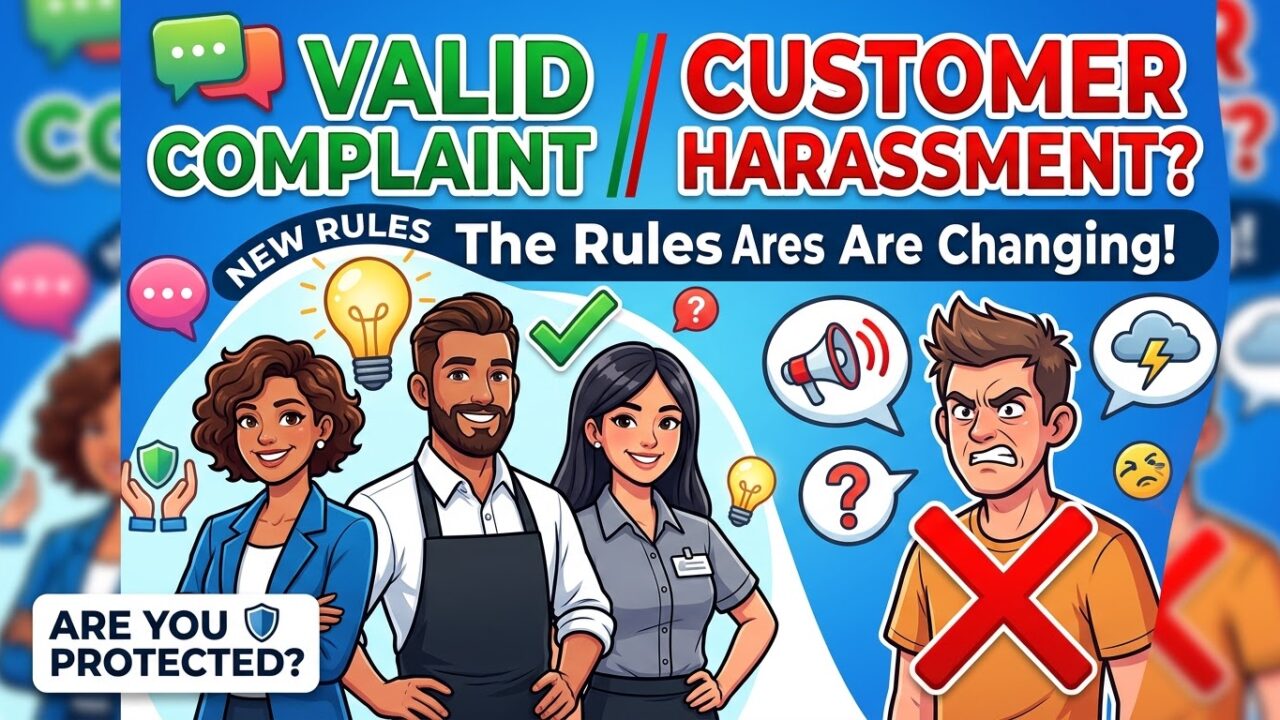
1. Where Is the Line Between a Valid Complaint and “Customer Harassment”?
It can be tricky to tell where a normal customer complaint ends and customer harassment begins.
Generally, the following behaviors are considered customer harassment:
Excessive demands: Unreasonable refund or monetary demands, forcing staff to make unrelated apologies, etc.
Verbal abuse and threats: Character assassination or threats like “I’ll expose you on social media!” or “I’ll get you fired!”
Prolonged detention: Refusing to leave for hours, making unnecessarily long phone calls, etc.
While legitimate feedback and requests for improvement are valuable, a situation crosses into harassment when the means or manner used goes beyond what is socially acceptable.
2. Why Are Legal Regulations Moving Forward Now?
In the past, under the mindset of “the customer is always right,” companies often found it difficult to take a firm stand against malicious customers. As a result, frontline staff were pushed to their emotional limits, leading to high turnover rates.
Recognizing this, national and local governments have shifted their approach toward a clear principle: “Protecting employee safety and mental health is a fundamental corporate responsibility.”
Some local governments have already passed anti-harassment ordinances, and discussions are underway at the national level to mandate that companies implement measures to prevent customer harassment.
3. How Will Our Workplaces and Daily Lives Change?
As legal frameworks and official guidelines take shape, we can expect the following positive changes:
Clear response manuals and firm action:
Rather than leaving staff to handle abusive behavior on their own, organizations can set firm boundaries and say, “We cannot fulfill requests beyond this point.”
Use of security cameras and audio recording:
Accurately documenting interactions makes it easier to consult with law enforcement or take legal action when malicious behavior occurs.
A society that respects the dignity of workers:
The outdated assumption that “paying money makes the customer right” is being re-evaluated, paving the way for a service environment built on mutual respect.
Final Thoughts
Creating a safe working environment for service and retail workers ultimately protects the quality of service for everyone and fosters a more comfortable society.
Anti-harassment measures aren’t just about turning away bad customers—they are essential rules designed to safeguard everyone who works. Let’s keep an eye on how these legal reforms and corporate initiatives evolve!